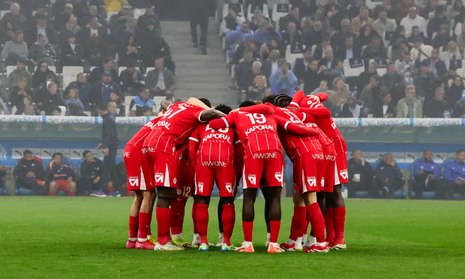

Goals conceded just before halftime are rarely random. In Ligue 1, this timing window exposes how teams manage concentration, energy, and structure under subtle pressure rather than overt chaos. When the same teams repeatedly concede between minutes 40 and 45+, the pattern usually reflects systemic behavior that accumulates quietly until a small error becomes decisive.
Late first-half goals emerge from decision fatigue, not physical collapse
The final minutes before halftime are defined less by tired legs and more by tired decision-making. Players have processed continuous information for forty minutes: pressing cues, passing angles, and opponent adjustments. The cause is cognitive load rather than exhaustion. The outcome is delayed reactions—half-steps late to close down, slightly deeper defensive lines, or rushed clearances. The impact is increased vulnerability without obvious warning signs earlier in the half.
Teams that concede late often appear stable for long stretches, which makes the timing misleading if viewed only through physical metrics.
Game-state management weakens as halftime approaches
As halftime nears, teams subconsciously shift objectives. Defenders think about “getting in level,” midfielders simplify choices, and forwards hesitate to track runs that seem non-urgent. The cause is temporal awareness: players know a pause is coming. The outcome is a collective drop in intensity consistency, and the impact is small spatial gaps that opponents exploit quickly.
This explains why late first-half goals often feel sudden. They emerge from accumulated micro-decisions rather than one clear mistake.
Structural compression creates late-half exposure
Many Ligue 1 teams compress their shape late in the half to reduce perceived risk. Lines drop a few meters, fullbacks hesitate to step out, and pressing triggers soften. The cause is protective instinct. The outcome is reduced pressure on the ball. The impact is allowing opponents cleaner deliveries or shots from zones that were previously contested.
Mechanism: how reduced pressure increases shot quality
When pressure drops even slightly, attackers can set their body shape and choose placement rather than improvising. This mechanism turns ordinary possessions into high-quality chances within seconds.
Teams most vulnerable share repeatable behavioral traits
Before identifying specific behaviors, it is important to note that late-half goals are rarely caused by a single tactical flaw. They emerge from a combination of habits that surface under time pressure. The explanation below outlines those habits and why they recur.
Common traits among teams conceding late in the first half:
- Pressing intensity drops without a clear fallback block
- Fullbacks delay stepping out on wide attackers
- Midfield lines become vertically stretched
- Clearances favor safety over territory
- Fouls increase in non-threatening zones
Interpreting this list shows that vulnerability comes from passivity, not aggression. Teams try to survive the half rather than finish it strongly, inviting pressure they can no longer control.
Set-piece concession rates rise sharply before halftime
Late first-half goals frequently arrive from set pieces. As focus dips, defensive discipline in wide areas deteriorates, leading to unnecessary fouls and corners. The cause is poor spatial judgment under fatigue. The outcome is increased dead-ball situations. The impact is higher conversion probability, as set pieces compress responsibility and punish hesitation.
This pattern is especially pronounced against teams that deliver aggressively from wide zones late in halves.
Identifying late first-half risk through in-play observation
From a live game reading perspective, late first-half vulnerability becomes visible through subtle cues. When second balls stop being contested and defensive clearances lose distance, the structural warning lights are already flashing. These signs appear even when possession numbers remain balanced.
Under situational conditions where this shift becomes clear, observing in-play market behavior through a betting interface such as ufabet เข้าสู่ระบบ can highlight timing-based inefficiencies. If prices remain static despite rising set-piece frequency and reduced pressing, the underlying risk may be underpriced. The cause is that markets often react to shots and possession, while late-half goals emerge from pressure accumulation. The outcome is delayed adjustment, and the impact is misreading short, high-risk windows just before the break.
Data patterns that confirm late first-half weakness
To confirm whether this issue is structural rather than anecdotal, recurring data signals are required. The table below outlines indicators that tend to spike in teams conceding late in the first half.
Before reviewing the table, it is important to understand that these indicators gain meaning only when they cluster together across matches.
| Indicator | What it shows | Why it matters late in the half |
| Fouls conceded (40–45’) | Discipline drop | Creates set-piece danger |
| PPDA increase | Softer pressing | Allows cleaner buildup |
| Box entries allowed | Spatial erosion | Signals loss of control |
| Clearance distance | Panic responses | Sustains pressure |
| Duel win rate | Focus decline | Loses second balls |
The interpretation is that late goals follow measurable process breakdowns. When several indicators rise together, conceding becomes a probability shift rather than bad luck.
When teams successfully avoid late first-half concessions
Not all teams are vulnerable. Those that avoid late concessions often do the opposite of instinct: they increase clarity rather than retreat. Passing becomes simpler but more assertive, pressing triggers are reinforced, and defenders step forward decisively. The cause is intentional management of the final minutes. The outcome is reduced opponent confidence. The impact is reaching halftime without inviting pressure.
These teams treat the final minutes as a phase to finish, not survive.
Summary
Ligue 1 teams that frequently concede goals late in the first half do so because of decision fatigue, passive game-state management, and subtle structural compression rather than physical collapse. Warning signs appear through reduced pressing, increased fouls, and weaker clearances before goals arrive. Understanding these patterns allows more accurate live interpretation of risk during a short but decisive match window.