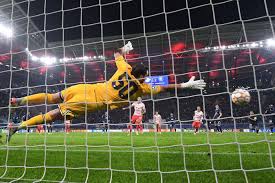

In the 2021/22 Serie A season, not every shot was created equal—and not every goalkeeper reacted the same way when it arrived. Team xG models estimate how often shots should become goals, but the actual conversion rates depend heavily on who stands between the posts and how they perform over time. For bettors and analysts, reading goalkeeper form accurately meant recalibrating expectations on totals, correct scores, and scorer markets beyond what team attacking metrics alone would suggest.
Why goalkeeper form matters beyond basic xG
Expected goals models treat finishing and shot‑stopping as noise around a long‑term average, but research on defensive overperformance—xG conceded minus goals conceded—shows that some keepers consistently outperform or underperform those baselines. A goalkeeper who saves more than the post‑shot xG of attempts faced suggests above‑average shot‑stopping skill, while one who concedes more than expected may be struggling with positioning, reactions, or dealing with certain shot types. Over a full Serie A campaign, these tendencies alter the real probability that any given on‑target effort becomes a goal.
From a betting perspective, treating all defences with the same “xGA” number as equally likely to concede ignores the human variation in goalkeeping. Two teams with similar defensive xG allowed can experience very different scorelines if one keeper is in peak form and another is having a poor season. That gap is where informed bettors can gain an edge by layering goalkeeper‑specific information on top of team metrics.
Key metrics for evaluating Serie A goalkeepers in 2021/22
The most commonly used goalkeeper metrics go beyond raw clean sheets or total saves. Analysts look at save percentage (saves divided by shots on target), goals conceded versus post‑shot xG, and, in some cases, penalties saved. Post‑shot xG focuses on the quality of shots actually on target, factoring in information like placement and trajectory, which makes it particularly suitable for isolating the keeper’s contribution as distinct from the defence in front of them.
In 2021/22, advanced stat providers compiled league‑wide tables where goalkeepers were ranked by their goals prevented—essentially, how many goals they saved relative to the quality of shots they faced. Those at the top consistently turned high‑quality chances into saves, while those at the bottom conceded more than models expected. For match reading, that difference shifted the baseline conversion odds of similar chances depending on who was in goal on a particular weekend.
Mechanism: from post‑shot xG to changed scoring probabilities
The post‑shot xG minus goals conceded metric provides a straightforward mechanism to update shot conversion expectations. Suppose two keepers each face shots that sum to a post‑shot xG of 40 across a season. If one concedes 34 and the other 46, the first is effectively preventing six additional goals, while the second is allowing six extra compared with the average. When translated to per‑shot probabilities, this implies that the same bundle of chances has a lower or higher likelihood of becoming goals depending on who is in net.
In practice, this means that backing overs purely on team attacking xG without accounting for a strong keeper can be over‑optimistic, while fading overs when a struggling keeper faces a high‑volume attack can be too conservative. The mechanism does not override xG, but it tilts the realised outcomes around that baseline in ways that become meaningful over dozens of shots.
How goalkeeper form interacted with team styles in 2021/22
Goalkeeper performance does not occur in a vacuum. Tactical reviews of the 2021/22 Serie A campaign highlight that some teams protected their goalkeepers with compact low blocks, limiting shot quality even if shot volume was high. Others played more open, high‑press football, accepting a higher xG conceded in exchange for stronger attacking numbers. In the former scenario, a good keeper amplifies defensive solidity; in the latter, a poor keeper can turn an already risky style into frequent high‑scoring matches.
Midseason analytical pieces noted that certain clubs benefited from standout keeper form that kept their points total above underlying xG expectations, while others underperformed because their goalkeepers could not match the quality of chances they faced. For bettors, that meant that reading only the league table or basic goals conceded numbers could misrepresent both the true strength of the defence and the momentum of shot conversion luck.
Using a comparative table to link goalkeeper profiles with betting tendencies
To make these ideas practical, you can classify goalkeepers into broad 2021/22 archetypes using save metrics and goals‑prevented data. The exact names matter less than the patterns they represent for shot conversion probabilities:
| Goalkeeper archetype (2021/22 patterns) | Statistical profile | Likely impact on shot → goal odds |
| High‑performer, positive goals‑prevented | Above‑average save %, goals conceded < post‑shot xG | Shots need to be cleaner to score; marginal unders or “both teams to score – no” gains appeal |
| Average shot‑stopper | Goals conceded ≈ post‑shot xG | Team xG and xGA already good approximations; no major adjustment needed |
| Struggling keeper, negative goals‑prevented | Save % below mean, goals conceded > post‑shot xG | Slightly higher chance that marginal shots become goals; overs and BTTS lean upward |
This table shows where goalkeeper form nudges the underlying xG‑based probabilities up or down. Over a full Serie A season, those nudges accumulate into different scoring profiles, especially for teams that concede many shots on target.
Using UFABET for process‑driven keeper‑aware betting
When you start integrating goalkeeper data into your pre‑match process, the way you use your account becomes as important as the stats themselves. If you operate through a platform that stores detailed bet histories, including market, stake and match data, you can treat it as a testing ground for keeper‑aware models rather than just a place to place ad‑hoc bets. In this context, thinking about แทงบอล means checking whether you can tag bets that explicitly factored in goalkeeper form—e.g. betting unders when a high‑performer is confirmed or leaning overs when a struggling keeper faces a shot‑heavy attack—and then compare their results to bets that ignored that layer. Over time, this separation shows whether the extra analysis around keeper form actually improves expected value.
Integrating goalkeeper form into pre‑match analysis routines
In practical terms, incorporating goalkeeper form into match reading for Serie A 2021/22 meant adding a couple of extra steps to existing xG and style workflows. After looking at team xG for and against, you would consult goalkeeper stats—save percentage, recent goals conceded versus xG, and any notable form streaks. Injury news or rotation also mattered: some teams saw noticeable drops when backup keepers replaced established starters.
When the numbers suggested a large positive or negative gap versus average, you could adjust your expectations on totals and both‑teams‑to‑score lines by a notch. For instance, if two open‑play‑strong teams met but one fielded an elite shot‑stopper, the model might still anticipate goals but with slightly less enthusiasm than xG alone would imply. Conversely, a shaky keeper behind an aggressive defensive line could turn a balanced xG contest into a high‑scoring, “goalkeeper‑decided” game.
Example checklist: connecting form to shot outcomes
A simple pre‑match checklist for keeper‑aware analysis might include:
- Check team xG for and xG against to understand shot quality environment.
- Look up the expected starting goalkeeper’s save % and goals‑prevented numbers relative to league average.
- Scan recent matches for evidence of form swings—errors, standout performances, or returning from injury.
If all three suggest that a particular keeper is either significantly over‑ or underperforming relative to the shots they face, you adjust your expectation about shot conversion rates accordingly. If they point in different directions—average metrics but recent variance, or strong metrics but small sample—your adjustment may be minimal, keeping you from overreacting.
Where goalkeeper‑driven expectations can mislead
Despite its value, goalkeeper analysis can also mislead if handled without care. Statistical research on finishing and shot‑stopping underlines that a large part of performance variance is still driven by randomness, especially over short samples. A few exceptional games—positive or negative—can skew save percentages and goals‑prevented metrics, leading to premature conclusions about form that do not hold over the next run of matches.
There is also the interaction with defensive quality: keepers behind poor defensive structures may face harder‑to‑save shots than models fully capture, while those behind elite defences may benefit from cleaner, more predictable attempts. If you attribute all deviations from xG to the goalkeeper rather than sharing responsibility with the defence, you risk overrating or underrating individuals. For bettors, the safeguard is to treat goalkeeper form as a secondary modifier, not as the primary driver of expectations; it nudges probabilities but does not rewrite them on its own.
How a casino online setting affects discipline around keeper‑based edges
When your betting takes place within a broader casino online website that includes slots, quick‑fire games, and a wide range of props, it becomes harder to maintain the disciplined, process‑driven approach that goalkeeper analysis requires. Keeper‑aware bets depend on carefully chosen matches and measured stake sizes; mixing them with large numbers of impulse wagers can drown any subtle edge they provide under noise.
Guides on record‑keeping and structured betting emphasise the value of tracking specific angles—such as “bets where keeper form was a factor”—separately from general activity. This approach lets you see whether your extra work on goalie metrics is paying off or whether it needs refining. Without that separation, a hot or cold streak in other casino‑style games can mislead you into abandoning or doubling down on a keeper‑based approach based on mood rather than data.
Summary
Analysing goalkeeper form in Serie A 2021/22 added a crucial layer of nuance to predictions about whether shots would turn into goals. Metrics like save percentage, goals conceded relative to post‑shot xG, and goals‑prevented rankings showed that some keepers consistently tilted outcomes away from xG expectations, while others leaked goals more readily than their team’s defensive numbers suggested. When integrated carefully into pre‑match routines and tracked through a structured betting process—separate from more impulsive activity in broader gambling environments—these insights helped bettors calibrate totals, both‑teams‑to‑score, and correct‑score expectations more precisely, without overreacting to short‑term variance or ignoring the defensive context in front of the goalkeeper.